Step by step

The hypnotherapy process

Uncertainty about what will happen is one of the main reasons people hesitate before making an enquiry. This page describes the process in plain terms — six steps, what each involves, and what is expected of you at each stage.

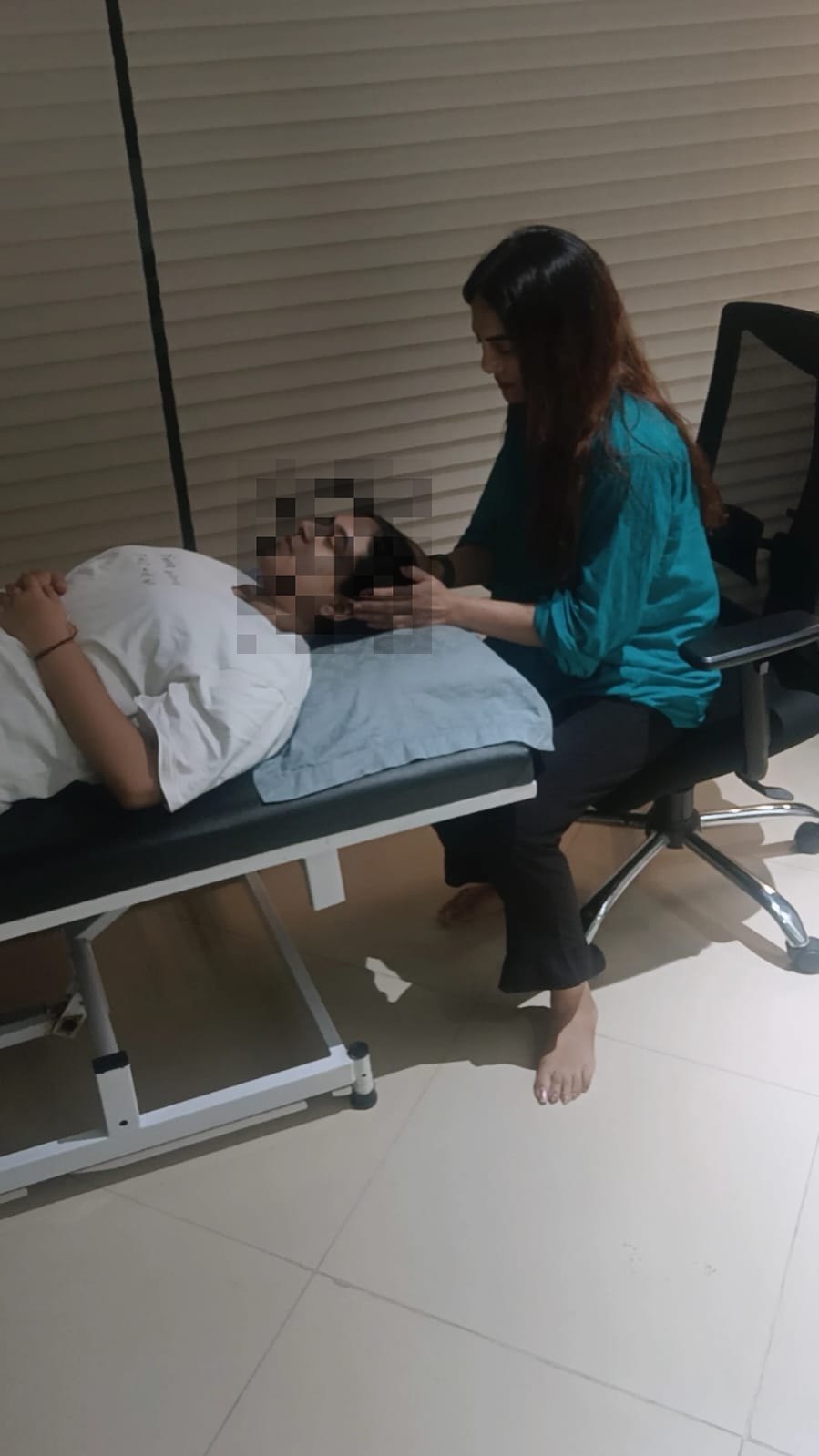
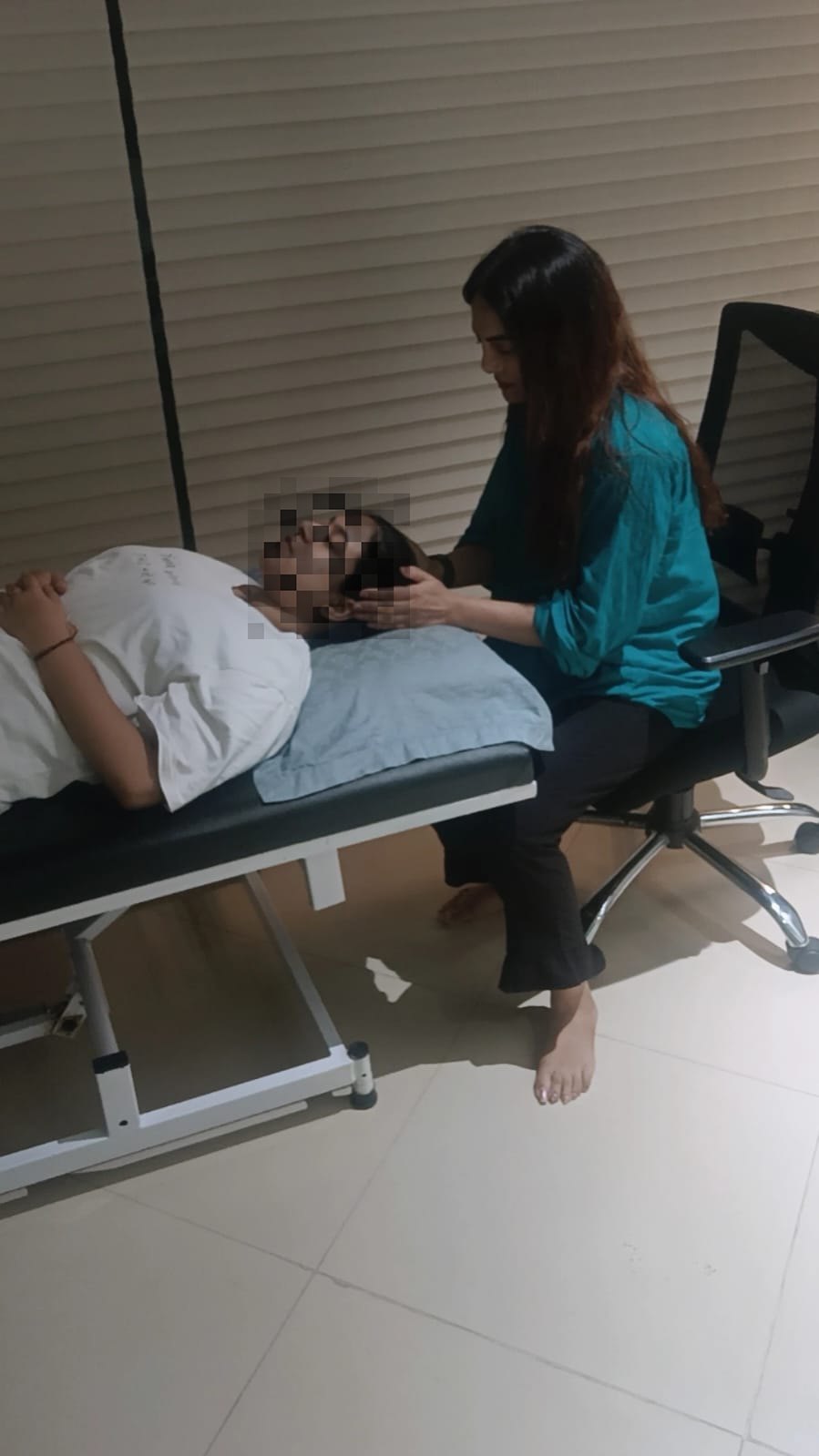
A hypnotherapy session in progress, with the practitioner seated beside a client resting comfortably
An individual session in progress. Client identity is protected in all images on this website.

Before anything begins

Three things that are true throughout

  • You stay in control at every point. You remain awake and aware, you can speak, ask questions, pause or end a session whenever you wish, and nothing proceeds without your agreement.
  • Nothing is hidden or mysterious. Each technique is explained before it is used, and you are welcome to ask why something is being done at any stage.
  • No outcome is promised. This is a supportive therapeutic process, not a guaranteed cure. What is offered is careful, structured work — the result of that work varies from person to person.

The six steps of the hypnotherapy process

Step01

Initial conversation

The first conversation is a discussion, not a treatment session. Its purpose is to understand your situation properly and to give you enough information to decide whether you want to proceed at all.

You will be asked about your smoking history — how long, how much, how it has changed over time — and about previous attempts to stop, including what worked for a while and what brought each attempt to an end. You will be asked what you are hoping for, and whether the wish to stop is entirely yours or partly someone else's. Every one of these answers is more useful when it is accurate rather than tidy.

You will also be asked about your health context and whether you are under medical care or taking any prescribed medication. Where medical input would be appropriate, you will be encouraged to speak with a qualified healthcare professional before or alongside this work.


What is expected of you: honesty rather than an impressive account, and any questions you have — including sceptical ones.

A professional consultation across a desk, representing the initial conversation about smoking habits and goals

Step02

Exploring patterns

The second stage builds a detailed picture of how smoking actually operates in your day. Rather than working with a daily total, the aim is to understand the individual occasions: which are routine, which follow pressure, which are social, and which happen in gaps.

This often involves paying deliberate attention between sessions without changing anything yet. People are frequently surprised by what this reveals. A person who believed their smoking was entirely stress-driven may discover that more than half of it is anchored to routine and occurs on calm days as reliably as on difficult ones.

What emerges from this stage is a map: your specific triggers, the situations that have historically been hardest, and what the behaviour appears to be providing at each point. That map shapes everything that follows.

What is expected of you: observation rather than effort. Nothing needs to change during this stage. See the trigger explorer →

Step03

A personalised therapeutic approach

Only now does the therapeutic plan take shape, and it is shaped around what the first two stages produced. There is no standard programme applied uniformly, because the same habit rarely serves the same purpose for two different people.

For someone whose smoking is largely routine-anchored, the emphasis may fall on restructuring sequences and weakening specific environmental cues. For someone whose pattern rises and falls with pressure, more time may go to how stress is experienced and responded to. For someone still weighing the decision, the early work may be almost entirely about clarifying motivation and examining ambivalence honestly.

The plan is discussed with you rather than presented to you, and it can be revised. If something is not working after a fair trial, saying so is useful information rather than a complaint.

What is expected of you: a view. If part of the plan does not feel right for your life, that is worth saying at the outset.

Reviewing a written record of habits and goals during a professional consultation

Step04

Hypnotherapy sessions

This is the part most people are curious and occasionally apprehensive about, so it is worth describing concretely.

You sit or recline comfortably, fully clothed, in an ordinary consulting setting. There is a period of conversation first, so that the session has a clear focus. You are then guided — through spoken suggestion and simple attention exercises — into a state of settled, focused relaxation. Your eyes are usually closed, your body relaxes, and your attention narrows onto what is being discussed.

You are awake throughout. You can hear the practitioner and anything else happening around you. You can speak, shift position, open your eyes, ask a question or bring the session to an end at any moment. Most people describe the experience as very relaxing and clearer-headed than they expected, rather than dreamlike.

Within that state, the therapeutic work proceeds: revisiting the triggers identified earlier, reinforcing the intentions you have expressed in your own words, and mentally rehearsing alternative responses to specific situations. The session then closes gradually and there is time to talk about it afterwards.

What is expected of you: willingness to participate. Hypnosis is something you do, with guidance — not something done to you.

A client resting comfortably during a supportive hypnotherapy session with the practitioner nearby

Step05

Behavioural awareness and ongoing change

A session lasts perhaps an hour. The week that follows it lasts considerably longer, and that is where most of the actual change takes place.

Work between sessions is deliberately modest and practical. It may involve continuing to notice when the pull arrives and what preceded it. It may involve making a small change to a physical environment — moving where you stand, removing an object, taking a different route. It may involve practising an alternative response in a low-pressure situation before attempting it in a difficult one.

Lapses are addressed directly rather than treated as taboo. If one occurs, the useful response is to examine what happened — which situation, what preceded it, what was different — and to feed that back into the plan. The alternative response, in which a single cigarette is taken as proof that the whole effort has failed, causes considerably more damage than the cigarette itself.

What is expected of you: a small amount of consistent attention between sessions, and honesty about what actually happened.

Step06

Individual progress

Progress is reviewed openly, and the review is honest about what has and has not shifted. This is the stage at which any exaggerated claim would become obvious, which is precisely why none is made at the beginning.

Individual outcomes vary considerably. Some people find that the daily count falls quickly and continues to fall. Some find that several triggers resolve while one remains stubborn. Some find that hypnotherapy helps with the behavioural side while the physical side needs medical support in parallel. Some conclude that a different form of support suits them better — and being told that plainly is more valuable than continuing indefinitely with something that is not working.

What can be said with confidence is what the process consists of: structured attention to your habits, your triggers, your motivation and your responses. Where that leads is individual, and no responsible practitioner will predict it in advance.

What is expected of you: a realistic assessment, including when the honest answer is that progress has been slower than hoped.

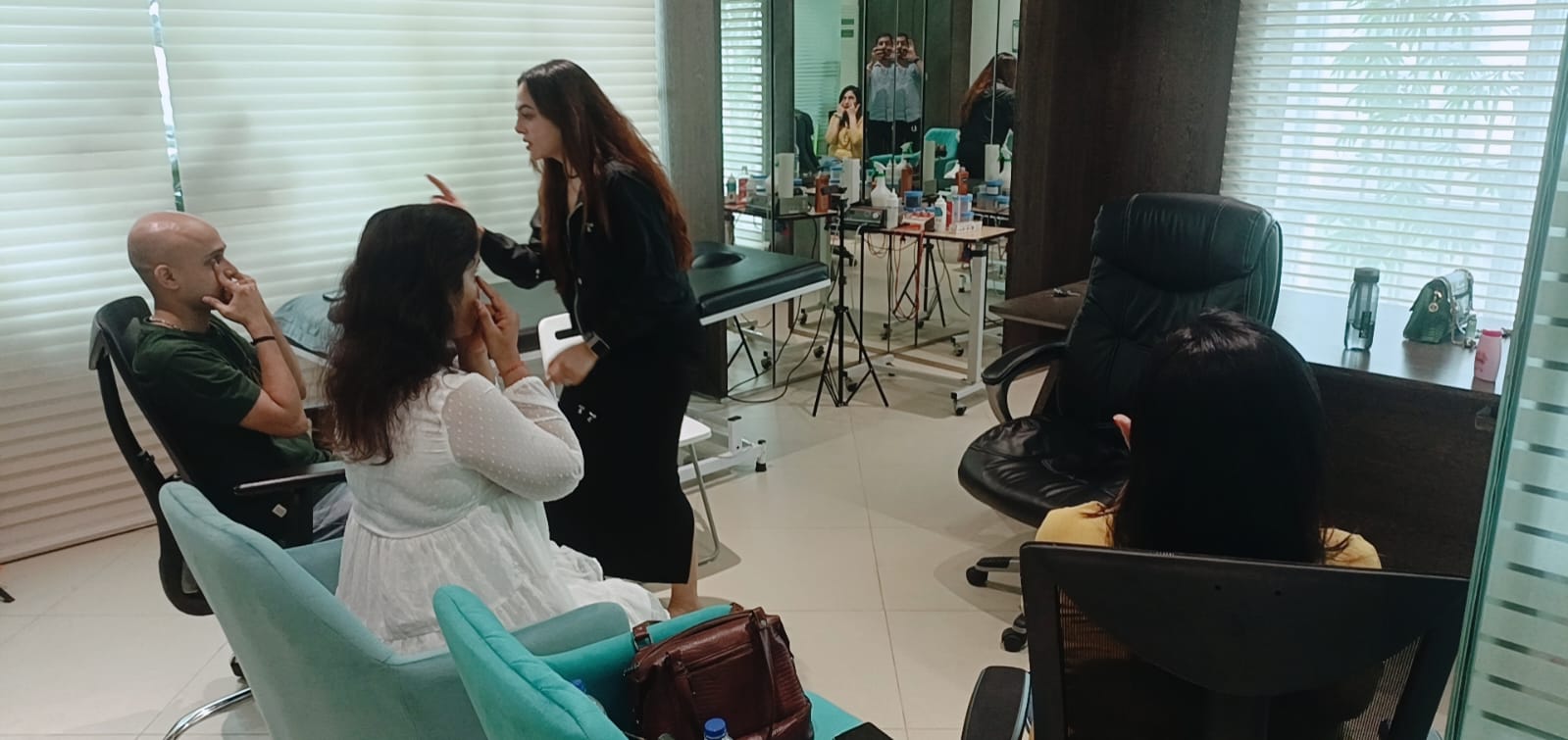
Vibha Jain explaining the stages of the hypnotherapy process to participants

Practical detail

Questions about the sessions themselves

The practical points people usually want settled before they make an enquiry.

You remain fully clothed and comfortably seated or reclined. There is conversation first, then a guided period of focused relaxation, then time to discuss the session afterwards. Nothing is administered, nothing is applied to you, and no equipment is involved.

This is common in a first session and it is not a failure. Some people settle immediately; others take longer, particularly if they are anxious about what will happen. Many people expect something dramatic and are initially disappointed by how ordinary the experience feels — which is worth knowing in advance, because the absence of drama is not the absence of usefulness. If focused attention proves genuinely difficult for you, that is discussed openly and the approach is adjusted.

Yes, at any point and without needing to explain why. You are not in a state you have to be released from — you can simply open your eyes and speak. Being told this clearly at the outset helps a great deal of unnecessary anxiety dissolve before the work begins.

Not necessarily, though a genuine willingness to participate is essential. If you are still weighing it up, that is an acceptable starting point and the early work can address the ambivalence directly. What does not work is attending purely because someone else has insisted, while privately having no intention of changing anything.

It is discussed during the initial conversation, once there is enough information to say something meaningful, and it is revisited as the work proceeds. No fixed number is quoted in advance on this website, because a number promised before anything is known about your situation would be a marketing figure rather than a clinical judgement.

What is discussed in a session is treated as private. No client names, stories or testimonials are published on this website, and any example used anywhere on this site is clearly labelled as illustrative rather than real. Details of how enquiry information is handled are set out in the privacy policy.

Step one

The first step is only a conversation

Nothing is committed to and nothing is decided on a first call. You describe your situation, ask whatever you need to ask, and then take your time.